




Heated Cat House Buying Guide: How to Choose an Outdoor Cat Shelter

When temperatures drop, it is reassuring to know your cat has a warm, dry place to retreat. A good heated cat house does more than provide heat—it combines a pet-safe heating system with insulation, weather protection, comfortable interior space, and a protected power setup.
Start with the cat that will use the shelter and the spot where it will sit. A cautious community cat may value a quiet entrance and escape route, while an older pet may need easier access and more consistent warmth. This guide will help you compare heating, construction, size, exits, and cleaning access so you can choose a heated cat house for outside that suits your cat’s real habits.
When Does an Outdoor Cat Need a Heated Cat House?
An outdoor cat may benefit from a heated cat house when cold weather lasts for long periods or when age, body condition, coat, health, or mobility reduces cold tolerance. Pet cats should come indoors during severe cold whenever possible. For community and feral cats that cannot be brought inside, a dry, insulated shelter with controlled warmth can provide a more protected place to rest.

According to veterinarian Hannah Hart, DVM, in PetMD’s 8 Outdoor Dangers for Cats and How To Keep Your Feline Safe, temperatures below 45°F can become uncomfortable for cats, while temperatures at or below 32°F increase the risk of frostbite and hypothermia. These temperatures are general guides because wind, moisture, coat, age, health, and exposure time also affect cold tolerance.
Heated Versus Insulated Shelter
An insulated shelter retains body heat without electricity. A heated and insulated shelter adds warmth at the resting surface while slowing heat loss through the walls, roof, and floor.
|
Shelter Type |
How It Provides Warmth |
Best Fit |
|
Insulated outdoor cat shelter |
Retains body heat and reduces drafts without power |
Mild or changing cold, locations without protected electricity, and shorter outdoor rest periods |
|
Heated and insulated cat shelter |
Adds controlled surface warmth while retaining heat |
Sustained cold, cats with lower cold tolerance, and sheltered locations with protected power |
Weather protection remains essential in either setup. Rain, melting snow, and wind can reduce comfort even when a shelter includes a heating pad. A dry insulated cat house may serve a cat better than a heated bed placed where water and drafts reach the sleeping area.
Cats That May Benefit From Added Warmth
Kittens, senior cats, thin or short-haired cats, and cats with health or mobility concerns may have less tolerance for cold. Ask your veterinarian about safe outdoor exposure when a medical condition affects your cat’s temperature control or movement.
The length and purpose of outdoor time also matter. A short porch visit does not require the same setup as overnight shelter for a community cat. In a colony, several smaller shelters may work better than one shared house when cats guard entrances or prefer separate sleeping spaces.
What Should You Look for in a Heated Cat House for Outside?
Choose a heated cat house for outside by evaluating four areas: the heating system, weather protection, interior layout, and daily upkeep. Product photos can make every little cabin look inviting. The details behind the door tell you whether it fits real winter use.

Pet-Safe Heating Features
A pet heating pad should provide controlled surface warmth without heating the whole shelter like a room heater. Cats naturally move between warmer and cooler spots, so the pad should not remove that choice. A pad that covers only part of the resting area gives a mobile cat space to move away.
Look for a pet heating pad with clearly stated temperature controls, safety features, power requirements, and permitted placement. Helpful product information should also explain how to remove or clean the cover and how to inspect the pad and cord for wear. These details make it easier to compare models and maintain the heating system safely through the season.
The cord deserves the same attention as the pad. Outdoor cats may scratch, knead, or chew unfamiliar objects. A protected or chew-resistant cord reduces exposed weak points, but you still need to route it away from teeth, claws, standing water, and foot traffic. Replace a damaged pad or cord instead of taping it and hoping for another season.
Mobility affects heater safety. A healthy cat must be able to leave the heated area whenever it wants. Get veterinary advice before using direct heat for a cat that cannot reposition itself, has reduced sensation, or is recovering from surgery.
Insulation and Weather Protection
Insulation helps the shelter hold warmth after the heater cycles off and reduces the energy lost through the walls, roof, and floor. Six-sided liners surround more of the sleeping area than a loose cushion on the floor. Removable liners also make seasonal cleaning easier.
The exterior must keep the insulated area dry. Compare the roof material, seams, door flap, floor, and base. A sloped or covered roof sheds rain better than a flat surface where water can sit. Raised legs or an elevated base create distance from wet soil, cold concrete, and small puddles.
Match the shelter’s weather-protection features to the location where you plan to use it. Review the roof design, raised floor, doorway flap, seams, cord opening, and permitted outdoor placement. Terms such as water-resistant, weather-resistant, and waterproof may refer to specific materials or components, so check the product instructions for the complete setup. Even an outdoor-ready house performs best on a well-drained surface with its electrical connection protected from precipitation and standing water.
Placement and construction work together. A fabric house may suit a dry garage or covered porch, while a hard-sided outdoor cat shelter provides more structure in an exposed yard. Even a weather-ready house lasts longer under an eave or other protected area.
Interior Space and Exit Layout

The interior should let your cat enter, turn around, curl up, and leave without creating a large empty chamber. Bigger can feel generous, yet unused air takes more heat to warm. Measure the cat that will use the shelter and compare that measurement with the listed interior dimensions and door opening.
Multiple cats add a social question. Bonded cats may sleep together and share warmth. Community cats that only tolerate each other near food may avoid a crowded entrance. Give them separate houses or more than one resting area when you see guarding, chasing, or hesitation.
An exit layout can also affect whether a cautious cat enters. Two openings give a cat another route when another animal approaches. Door flaps block wind, but a feral cat may distrust one at first. You can hold the flap open during the introduction period, then lower it in stages after the cat starts using the house.
Single-level designs keep the heated sleeping area easy to reach. Multi-level houses add perches and resting zones, but heat from one pad may not serve every level equally. Choose the layout for your cat's habits, not because an extra floor looks impressive in the yard.
Cleaning and Seasonal Use
Easy access makes a heated cat house easier to keep dry and pleasant. Look for an opening roof, removable panel, washable liner, or removable pad cover. You should be able to reach the corners without dismantling the entire house each week.
Check the shelter often during wet or freezing weather. Remove damp material, wipe soil from the entrance, and inspect the pad and cord. Keep water bowls outside the sleeping room because one spill can soak the liner and chill the interior.
A removable heating pad extends the useful season. Take it out when the weather warms, clean the liner, and keep the structure as a covered resting spot. This also gives you a chance to inspect the pad before cold weather returns.
Before buying, use this short heated cat house checklist:
-
Heating Controls: The product explains its temperature control, overheat protection, power needs, and intended use.
-
Dry Construction: The roof, raised base, door protection, and seams suit the location you plan to use.
-
Usable Space: The interior and opening fit your cat without leaving an oversized empty chamber.
-
Safe Movement: Your cat can leave the heated surface and exit the shelter without being blocked.
-
Cleaning Access: You can remove or reach the liner, pad cover, floor, and corners for regular care.
How Should You Place and Power a Heated Outdoor Cat House?
For a heated cat house outdoor setup, place the shelter on stable, dry ground near safe outdoor power, with the entrance turned away from wind and heavy traffic. The best product cannot correct a site that floods, channels wind through the doorway, or leaves electrical connections in snow.

Choose a Dry, Protected Position
Start by watching the area during rain. Patios can drain toward a wall, roof edges can dump water onto one small spot, and snowmelt can collect beside steps. Set the house above those paths on a level surface. Raised feet help with ground moisture, but they do not replace good drainage.
Face the entrance away from the prevailing winter wind. A wall, porch, fence, or shed can add shelter, provided the location still allows you to inspect every side. Avoid placing the door beside a busy walkway, barking dog, loud gate, or idling vehicle.
Community cats often prefer a private position near a route they already use. Place the house near their usual resting area, then give them time. Moving it every day can make the object feel less familiar. Keep food nearby if needed, but leave water outside the sleeping room.
Plan Outdoor Power Safely
Use a weather-protected, GFCI-protected outlet for a powered heated cat house. The U.S. Consumer Product Safety Commission explains that a GFCI can cut power within milliseconds when it detects an electrocution or electrical burn hazard. The CPSC also advises consumers to use extension cords labeled for outdoor use and to discard cracked, worn, or damaged cords.
Keep the plug and every connection above standing water and protected from precipitation. Use the heating pad exactly as its manufacturer directs. Never remove a grounding pin, join several extension cords, or run a cord where a door, window, mower, or snow shovel can damage it.
An extension cord is a temporary power solution, not permanent outdoor wiring. Ask a licensed electrician about a proper outdoor receptacle when the shelter will remain in place for a full season. That is a better answer than leaving a long cord across the yard for months.
Test the House Before Your Cat Uses It
Assemble the shelter, install the liner and pad, and run the system before introducing your cat. Confirm that the pad follows its stated control settings, the cord stays dry, and the interior has no sharp hardware or loose pieces.
Then let the cat investigate. Some cats walk in within minutes. Others stare at the new house as if you have placed a spaceship beside the porch. Hold the door flap open, add a familiar scent, and avoid forcing the cat inside. Gradual acceptance is safer and usually more successful.
Check the setup daily during the first week. Look for dampness, shifted bedding, tooth marks, loose connections, and signs that another animal blocks the entrance. Once the setup stays stable, continue regular checks throughout cold weather.
How Can Aivituvin Heated Cat Houses Meet These Outdoor Needs?
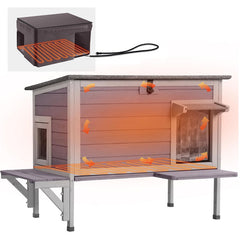
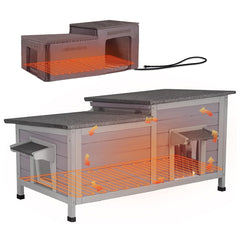
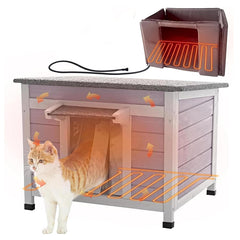
Aivituvin offers wooden heated cat houses with different footprints, interior layouts, insulation systems, and outdoor features. The following examples show how the buying priorities in this guide apply to vertical spaces, longer placement areas, and compact single-level setups. Each model is part of Aivituvin’s outdoor cat house range.

|
Outdoor Need |
Aivituvin Example |
Relevant Features |
|
Narrower footprint with a vertical layout |
AIR91-IN-HP |
Wooden two-level structure, removable insulated liner, asphalt roof, raised base, PVC door flap, and heating pad listed at 89°F to 116°F |
|
Longer wooden footprint with more horizontal space |
AIR93-IN-HP |
39.1-inch-long wooden structure, removable soft liner, asphalt roof, elevated base, door flap, chew-resistant cord, and heating pad listed at 89°F to 116°F |
|
Compact single-level sleeping area |
AIR12-IN-HP |
Wooden structure, six-sided removable liner, opening asphalt roof, raised floor, PVC door flap, and thermostatic heating pad with overheat protection |
Aivituvin AIR91-IN-HP combines a narrower 16.1-inch width with a two-level wooden layout. Its removable liner, raised base, door flap, and heated resting area make it a practical option when you want more vertical space without choosing the longest footprint of these three models.
Aivituvin AIR93-IN-HP has the longest footprint in this comparison at 39.1 inches. It pairs that extended wooden structure with a removable soft liner, elevated base, weather-protective asphalt roof, door flap, and controlled heating pad. Consider this model when the placement area can accommodate a longer shelter and horizontal interior space is a priority.
Aivituvin AIR12-IN-HP provides a compact single-level shelter with an opening roof, six-sided removable liner, raised floor, PVC door flap, and thermostatic heating pad. Its straightforward layout is well suited to a fixed porch, garage edge, or protected outdoor position where easy access to the sleeping compartment matters.
Compare these models with other heated cat houses, including larger and multi-level designs. Choose AIR91-IN-HP when vertical space is useful, AIR93-IN-HP when a longer horizontal footprint fits the site, or AIR12-IN-HP when you prefer a compact single-level shelter. Confirm the current dimensions, usable interior space, weather exposure, and power requirements before ordering.

Frequently Asked Questions
Are Heated Cat Houses Safe Outdoors?
A heated cat house can be used outdoors only when both the shelter and heating pad are approved for the intended location. Use the manufacturer-specified power setup, keep every electrical connection dry, inspect the pad and cord regularly, and make sure the cat can move off the heated surface.
Can Multiple Cats Share One Heated Cat House?
Cats can share when the usable interior fits them and they already sleep together comfortably. Provide separate shelters if you see doorway guarding, chasing, hesitation, or one cat repeatedly left outside.
Can a Heated Cat House Stay Outside in Rain or Snow?
Only if the product instructions permit that exposure and the electrical connection remains protected. Place it on a stable, well-drained surface and move it to greater shelter if wind-driven rain, drifting snow, or runoff reaches the entrance, floor, cord, plug, or outlet.
How Much Electricity Does a Heated Cat House Use?
Multiply the pad’s wattage by its daily operating hours, then divide by 1,000 to estimate daily kilowatt-hours. Multiply that result by your electricity rate; actual use may vary if the heater cycles or uses adjustable settings.
How Do You Get a Feral Cat to Use a Heated Shelter?
Place the shelter near a private route or resting area the cat already uses and keep it in a consistent position. Hold the flap open initially if the design permits, add a familiar scent that is safe for the heating pad, and let the cat enter voluntarily.
Which Heated Cat House Should You Choose?
Choose a heated cat house by matching your cat’s cold tolerance and sleeping habits with a dry, insulated shelter, a pet-safe heating system, suitable interior space, and a protected outdoor power setup. The cat must be able to leave both the heated surface and the shelter freely.
Compare Aivituvin heated cat houses for outdoor cats by usable interior dimensions, heating specifications, weather exposure, cleaning access, and placement requirements. Select the model that fits your cat and location rather than choosing by exterior size or appearance alone.
Leave a comment